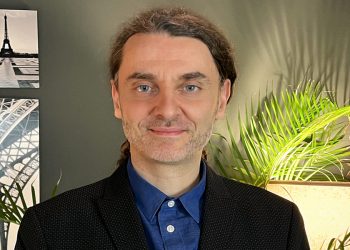


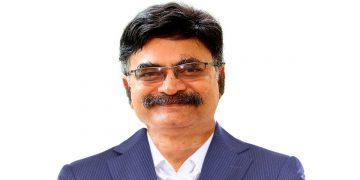





Professor Chandrashekar Ramanathan, Dean (Academics) at the International Institute of Information Technology – Bangalore (IIIT-B), has been a pivotal figure in shaping the institute’s journey in computing and data science. With over 15 years at IIIT-B and a rich background in both industry and academia, his insights into emerging technologies, education, and governance offer a compelling vision for the future. In this interview, he reflects on his contributions, the evolving landscape of data science, and the transformative potential of AI and robotics.
Q. You’ve been associated with IIIT-B for over 15 years. How has the institute evolved during your tenure, particularly in the fields of computing and data science?
The field of computing has evolved enormously since I joined IIIT-B in 2007. My decade of industry experience helped me keep IIIT-B students ahead of the curve. Data science was still nascent at that time, with only one other faculty member offering courses in the area. I am delighted that I played a significant role in steering IIIT-B towards data science by designing and delivering a course on Data Analytics in those early days.
Q. Can you walk us through your current research focus in Data Science and Model-based Software Engineering? What excites you most about these areas?
In my view, the ability to run software without manually developing it (i.e., designing, coding, testing, deploying) is the ultimate holy grail of software engineering. We are at a fascinating stage of the computing revolution where data science is aiding software engineering to achieve this goal through generative algorithms, modelling, and technologies.
Q. As the head of MINRO and CTRI-DG, what are some impactful projects currently underway, and how do they align with the broader vision of the Government?
IIIT-B’s focus on translatable research has enabled the MINRO Centre to produce remarkable technology. For instance, technology developed at the MINRO Centre provides virtual interviewing experiences to remote aspirants, eliminating the need to travel to cities for coaching. Similarly, cutting-edge assistive technologies are being developed at MINRO and piloted in collaboration with healthcare providers. The research at CTRI-DG aims to develop model-based tools and techniques to revolutionise the development and deployment of e-governance applications.
Q. How do you see the role of emerging technologies like AI and robotics transforming higher education and governance in India?
Academia worldwide is at a crossroads, with significant implications for both learners and educators. Employers’ expectations have risen dramatically—students must be employable from day one, highly efficient, productive, and capable of making high-quality contributions. Tasks previously deemed “humanly impossible” are now expected to be performed by AI and robotics. Students from higher education institutions will be the torchbearers of AI in the future, and educators who fail to prepare them adequately will be left behind. Governance in India will rely on digital public infrastructure (DPI) to achieve seamless e-governance. IIIT-B is already making a global impact in this space through MOSIP, the Centre for DPI, and the Centre for Open Societal Systems (COSS).
Q. Could you share a few highlights from your work on the Technical Advisory Panels for departments such as Education and Finance?
I have been a Technical Advisory Panel (TAP) member for these departments for over a decade. It has been a privilege to witness firsthand the commitment of leaders and officials to use technology to improve the lives of millions of citizens. My role involves mediating, moderating, guiding, and reviewing the departments’ complex journey from vision to effective e-governance solutions.
Q. With your background in both industry and academia, what do you believe are the key gaps in preparing students for real-world tech challenges?
The three most important components of any “body of knowledge,” drawn from Bloom’s Taxonomy, are Remembering, Understanding, and Applying. The biggest gap, in my opinion, lies in the Apply component. We strive to provide immersive experiential learning through real-world projects from centres like MINRO, CTRI-DG, and others. Industry demands graduates who are productive, efficient, and quality-conscious from day one.
Q. You’ve supervised five PhD students successfully. What qualities do you look for in a researcher, and what advice would you offer aspiring PhD candidates?
Research is driven by exploration, which requires curiosity. The role of a PhD supervisor evolves over time. A PhD is a three-phase journey. In phase one, the supervisor takes the lead, setting the student on the path of exploration. Here, students must embrace curiosity and absorb new perspectives. In phase two, the student takes control, with the supervisor guiding closely. This phase involves building research skills, such as methodology, hypothesis formulation, and result validation. In the third phase, the student fully takes charge, exploring the unknown with the supervisor’s support. This phase can be challenging, with elusive results and rejections, but students must persevere, knowing there is always light at the end of the tunnel.
Q. How does your experience with databases still inform your teaching or research in today’s data-centric world?
Everyone says, “Data is the new oil” in today’s data-centric world. I feel fortunate that the knowledge and skills I have developed over the past three decades continue to drive my teaching and research. I incorporate elements of the data lifecycle—generation, storage, retrieval, processing, archival, and destruction—across multiple courses, projects, and research.
Q. What do you think differentiates a strong data science educator in today’s fast-evolving landscape?
Unlike traditional software fields, data science and AI require an additional focus on domain knowledge. Developing data science models is impossible without considering the domain for which the model is built. For example, the feasibility of an AI-driven recommendation for a nationwide sale can only be fully appreciated by someone with a deep understanding of the e-commerce or retail industry. Strong data science educators must connect technological solutions with sound domain reasoning and subject matter expertise.
Q. What are your thoughts on industry-academia collaboration in India? How can this partnership be strengthened for mutual growth?
Industry-academia collaboration is more critical now than ever. Collaboration can take various forms, including participation in curriculum committees, funding research, providing internships, and offering mentorship.
Q. What initially drew you to computing and software engineering, and how did your academic journey unfold from there?
The ability to command an inanimate object like a computer by giving it instructions was empowering. After the initial excitement, I became fascinated with emerging technologies and their potential to solve real problems. This quest led me to industry rather than academia after my PhD. IIIT-B, as an emerging institution, welcomed PhDs with industry experience. I joined at the right time, and the rest, as they say, is history!
Q. Who have been the most influential mentors or role models in your life and career?
I am grateful to numerous outstanding individuals who shaped my career across multiple transitions—from academia during my PhD, to industry as a fresh PhD, and back to academia as a new academic. The lessons I learned continue to inspire me today.
Q. Outside of your academic and research work, what hobbies or interests do you enjoy pursuing?
I am a self-taught drummer and an enthusiastic sports lover, playing cricket and badminton for recreation.
Q. Balancing research, teaching, and advisory roles can be demanding. How do you maintain a work-life balance?
I use my hobbies to stay connected with family and friends. I keep one foot firmly planted in my professional responsibilities, which I approach with equal enthusiasm. It is demanding but enjoyable.
Q. Looking back, what is one moment in your career that you cherish the most, and why?
Being recognised as one of the Top 10 Data Science Academicians in the country for two consecutive years is a moment I will cherish for a long time. Knowing that learner feedback played a significant role in this recognition is deeply satisfying. Perhaps I’m not such a bad teacher after all!
Professor Chandrashekar Ramanathan’s journey at IIIT-B reflects a remarkable blend of innovation, leadership, and dedication to advancing technology for societal impact. From pioneering data science education to driving transformative research in AI and e-governance, his work continues to shape the future of computing in India. His passion for teaching, curiosity-driven research, and commitment to bridging industry and academia make him a true visionary in the field.