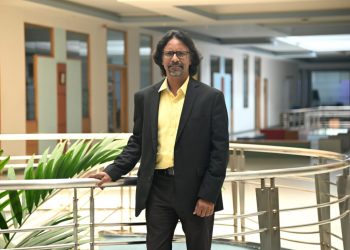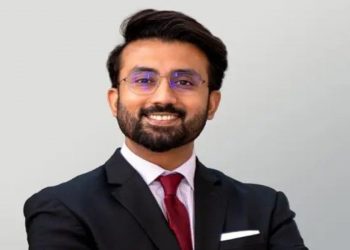



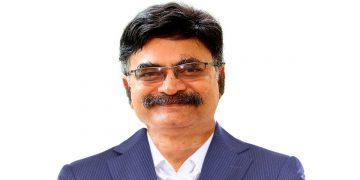





In an era where artificial intelligence, quantum computing, and climate technology are transforming every aspect of society, Giorgio Zampirolo — Innovation Strategist in Digital Evolution and Research Consultant at The Open University, London — stands at the forefront of reimagining education for the 21st century. Drawing on his global experience from Dhaka to Milan, Zampirolo believes that education must evolve beyond mere preparation for the future to become a force that empowers individuals to create it. In this insightful conversation, he shares his vision for the digital transformation of higher education, the balance between tradition and technology, and the mindset needed to navigate a rapidly converging world.
Q. What personal vision drives your work as an innovation strategist in the realm of digital education and transformation?
One belief guides me: education should not only prepare people for the future, it should empower them to shape it. I’ve seen this first-hand, from Dhaka to Milan.
We live in an age of rapid change, where AI, IoT, quantum computing, and climate technology intersect to transform every sector. This demands a bold, creative, and systems-level response from education.
Whether mentoring start-ups at Bocconi B4i or co-developing strategic learning approaches through Paradigma and VVA BC, my mission is to align training with real-world transformation.
I also co-lead AI Leadership Compass, a cross-cultural think-and-do tank of innovators across six cities on three continents. We help leaders rethink how we learn, lead, and collaborate in an AI-shaped world.
Q. In your view, what will online higher education look like by 2035? How should institutions begin preparing today?
By 2035, education will evolve into fluid learning ecosystems — AI-driven, community-powered, and seamlessly integrated into work and life. Imagine quantum-enhanced simulations for medical students, AI tutors personalised for neurodiverse learners, and IoT-linked campuses providing context-aware feedback.
At AI Leadership Compass, we track early signs of this convergence — XR-based STEM labs in Singapore, quantum diagnostics in Sweden, and AI+IoT digital twins in Dubai.
Institutions must invest not just in technology, but in strategic imagination and cross-sector collaboration. Kenya’s Digital Literacy Programme exemplifies this — it’s not merely about devices but about embedding digital thinking, empowering teachers, and engaging communities.
Q. What changes do global education systems need to make to truly embrace a borderless, modern model of higher education?
“Borderless” education sounds utopian, but without shared values and standards, it risks fragmentation. We need interoperable systems grounded in trust, ethics, and shared purpose.
At AI Leadership Compass, our comparative studies reveal that peer-based learning flourishes in Scandinavian horizontal structures, while Singapore’s success stems from high-trust institutional frameworks.
The future lies in collaborative pluralism — systems that interlock without losing their identity. True transformation occurs through the convergence of technologies, cultures, disciplines, and mindsets.
Q. What are the core skills educators and institutions need to adopt technology effectively in higher education?
Three stand out: technological curiosity, flexible pedagogy, and collaborative sense-making.
Educators don’t need to code AI models but must grasp their logic and impact. They should reimagine pedagogy, not merely digitise it, and co-create learning experiences with students.
At Paradigma, we implemented a cross-functional design model with an Italian SME’s academy, combining design thinking, AI tools, and real-time coaching — fostering ownership, adaptability, and learner agency.
Q. How can universities balance traditional education with digital evolution while maintaining quality and relevance?
Tradition can be an asset, not an obstacle. Innovation often comes from reinterpreting the past. Oxford-style tutorials, for instance, are now being reimagined through AI-powered dialogue systems.
Rituals such as mentorship, debate, and reflective reading can be scaled and personalised with digital tools. The goal is not disruption for its own sake, but regenerative innovation — evolution rooted in enduring academic values.
Q. What kind of global digital education policies should be standardised or introduced to foster inclusive and equitable online learning?
We need policy in three areas: digital access as a public good, AI and data ethics in education, and global credential interoperability.
Estonia’s national framework for digital citizenship offers a model worth emulating.
At Paradigma, we promote policy co-creation between start-ups and universities to ensure inclusive, localised adoption of technology within SME training ecosystems. A recent project in Northern Italy aligned policymakers and SMEs with AI skill frameworks — a step towards equitable transformation.
Q. Can you share a project or initiative from The Open University that exemplifies sustainable innovation in education?
The ConductIT project, where I served as research consultant, reimagined how orchestral conducting can be taught through digital means. Using multi-angle video analysis, professional documentation, and career guidance, it demonstrated how embodied learning can thrive online.
A key finding was that distributed learning through multiple perspectives can be as impactful as expert instruction. It reshaped notions of authority in digital learning and now informs our collaborative design models at Paradigma.
Q. How can scalable learning platforms better support personalised, lifelong learning experiences?
Scalability without personalisation is noise. Platforms must function as intelligent ecosystems — adaptive, socially connected, and linked to real-world needs.
Accenture’s LearnVantage exemplifies this by aligning strategy with individual learning journeys. At AI Leadership Compass, our AI-assisted mentoring in Milan doubled completion rates, while mobile microlearning in Bangladesh has empowered SMEs with accessible upskilling opportunities.
Learning in real contexts is more engaging, efficient, and enduring.
Q. Which three future skills are most critical for students entering the evolving digital workforce?
- Sensemaking – analysing complexity and translating insights into action.
- Collaboration literacy – leading and contributing across cultures, platforms, and hierarchies.
- Self-leadership – practising resilience, ethical decision-making, and clarity amid change.
- You often speak about an “abundance mindset.” How can this reshape the way institutions approach education challenges?
An abundance mindset views constraints as invitations to innovate and learning as an ever-expanding resource.
At Paradigma, we help SMEs view training as a strategic transformation tool rather than an expense. Similarly, AI Leadership Compass encourages leaders to see AI not as competition, but as a creative partner that expands human potential.
Q. Having worked across several countries, how do you adapt your strategies to different educational cultures and infrastructures?
Cross-cultural collaboration isn’t plug-and-play — it must be co-created.
At AI Leadership Compass, we form city-specific working groups to uncover insights, challenge assumptions, and prototype localised solutions.
In Bangladesh, for example, we’re developing hybrid upskilling frameworks for industrial SMEs using microlearning, trust-building, and inclusive language. Adaptation begins with listening and building trust.
Q. What advice would you offer to young professionals aiming to lead innovation in educational technology?
Learn quickly, and fail transparently.
I once supported a start-up with a strong adaptive learning platform, but adoption lagged because we hadn’t tested workflows with educators in low-connectivity regions. Early user involvement is vital.
Another project faltered due to slow procurement processes — a lesson in designing for systems, not just users. Cross-pollinate ideas: read philosophy with code, talk to both artists and engineers. The future belongs to those who connect the dots.
Transparency builds trust, and trust drives innovation.
Q. How can educational institutions ensure digital transformation aligns with Sustainable Development Goals (SDGs)?
Digital convergence accelerates SDG outcomes when tied to local value chains. For instance, an IoT-based water-monitoring curriculum can enhance both STEM education and water access.
At Paradigma, we connect climate start-ups with established industries to produce measurable results — from CO₂ reduction to job upskilling. Using ESG metrics, we ensure education both enables and evaluates sustainable progress.
Q. How do you see AI impacting assessment, instruction, and student engagement in online education?
AI can enhance or hinder learning depending on how it’s applied. Predictive analytics may prevent dropouts but risk reinforcing bias. Automated feedback saves time but can reduce reflection.
At AI Leadership Compass, we promote pedagogical sovereignty — ensuring educators co-create AI tools with learners and retain control of educational narratives.
Q. Which recent insight or book has most significantly influenced your current work or thinking?
Rick Rubin’s The Creative Act reminded me that creativity is a disciplined practice, while the WEF Technology Convergence Report 2025 revealed how AI, IoT, quantum technology, and sustainability are merging to reshape industries.
These insights fuel projects at Paradigma, where we match start-ups with SMEs to co-design regenerative innovation, and inform AI Leadership Compass’ roadmaps for converging futures.
I take on a 52-book reading challenge annually — because strategy, at its best, begins with curiosity.
Giorgio Zampirolo’s perspective embodies a rare blend of visionary thinking and grounded pragmatism. To him, innovation in education isn’t about chasing technology, but about cultivating imagination, trust, and shared purpose. His call is clear — as AI and emerging technologies redefine learning, educators and institutions must lead with humanity, creativity, and courage. Because, as Zampirolo reminds us, the true goal of education is not just to prepare for the future, but to shape it together.