









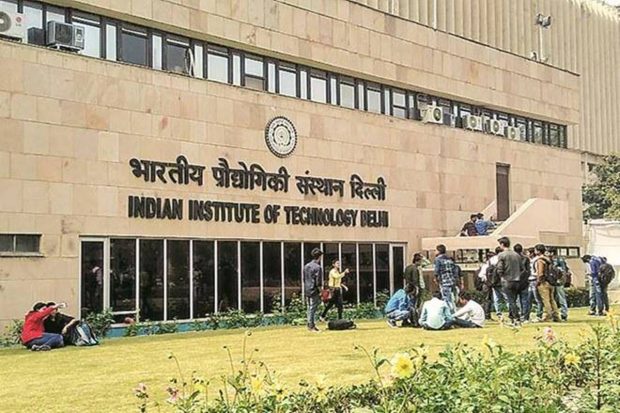
The Indian Institute of Technology Delhi has retained its position as India’s top institution in Engineering and Technology, securing the 36th rank globally. The latest rankings also mark a significant milestone for the institute, with five of its core engineering disciplines entering the global top 50 for the first time.
Electrical Engineering leads the performance at rank 36, followed by Mechanical Engineering (44), Computer Science (45), Chemical Engineering (48), and Civil Engineering (50). This represents a notable improvement compared to the previous year, when only Electrical Engineering featured in the top 50 at rank 47, while the remaining disciplines were ranked outside this bracket.
According to Professor Somnath Baidya Roy, Dean (Planning) at IIT Delhi, the achievement reflects the institute’s sustained academic and research efforts. While he noted that rankings offer only a partial measure of institutional performance, he emphasised that they indicate IIT Delhi’s strengthening global presence. He also reiterated the institute’s commitment to delivering high-quality, accessible education that produces leaders across industries.
The advancement in Electrical Engineering has been attributed to curriculum modernisation, enhanced laboratory infrastructure, and new academic initiatives such as a postgraduate diploma in VLSI design and the establishment of a student innovation lab. Mechanical Engineering has similarly progressed, driven by the integration of artificial intelligence in teaching and research, along with contributions to defence-related projects supported by Defence Research and Development Organisation.
In Computer Science, departmental leadership highlighted the role of young faculty, student researchers, and continuous curriculum upgrades, supported by investments in high-performance computing infrastructure. The department has set an ambitious target of entering the global top 30 by 2030.
Chemical Engineering has also recorded strong growth, supported by industry collaborations and research funding exceeding Rs 40 crore over the past five years. The department has reported a substantial increase in both patents and research output, with a focus on developing cost-effective and sustainable technological solutions.
Meanwhile, Civil and Environmental Engineering has undergone curriculum transformation to incorporate emerging technologies such as artificial intelligence, robotics, and drone-based systems. Research efforts in this domain are increasingly aligned with sustainability goals and the development of disaster-resilient infrastructure.
Beyond the top 50 rankings, IIT Delhi has expanded its academic footprint across disciplines. A total of 12 subjects now feature within the global top 100 across Engineering and Technology, Natural Sciences, and Social Sciences and Management. These include Environmental Sciences (78), Materials Science (64), Mathematics (86), Business and Management Studies (71), and Statistics and Operational Research within the 51–100 range.
At the broader disciplinary level, IIT Delhi continues to rank among the world’s top 100 institutions in Natural Sciences (91) and Social Sciences and Management (84). These outcomes reinforce its standing as one of India’s leading research-driven institutions with a steadily growing international reputation.